Skip to content

Learning & inclusion

Small skills. More belonging.

Practical ways to learn together, with space for different minds, communication styles and everyday needs.

Illustrated learning activitiesExplore the activities
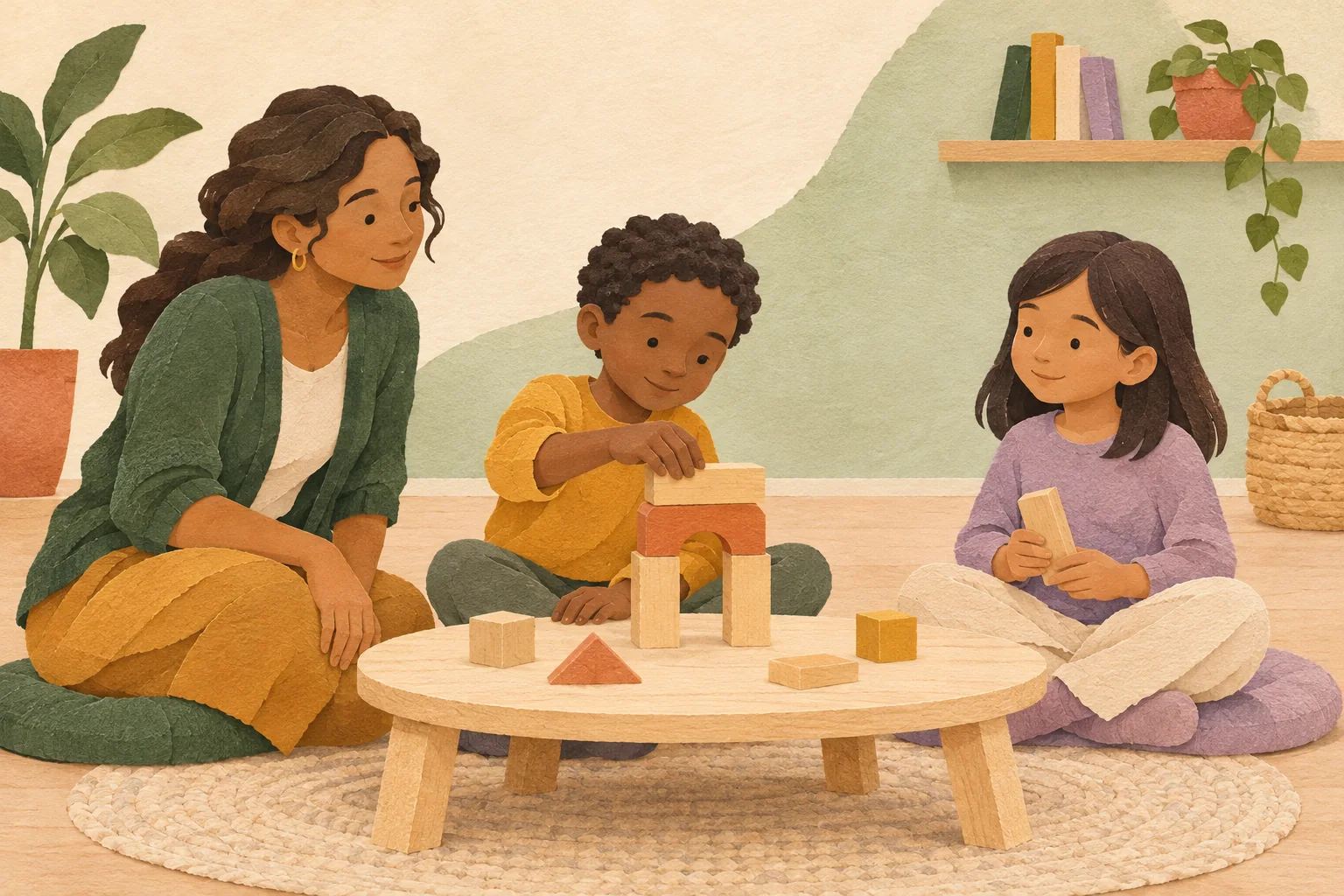
Illustration of three people taking turns building with blocks.

Our approach

Understand first. Grow together.

01

Understand

Be curious about each person's strengths, needs and preferred ways to communicate.

02

Support

Offer predictable routines, sensory choices and help without judgment.

03

Empower

Make room for choice, self-advocacy and a comfortable pace.

04

Include

Adapt the environment so belonging does not depend on masking differences.

05

Teach

Model a skill, practise together and return to it gently.

Try an activity

One moment. One useful skill.

Choose a module to explore on your own or together. Participation, breaks and communication methods are always a choice.

Practical learning activity

Explore on your own or with someone you trust. These are educational activities, not an assessment or therapy. No accounts or personal information are needed.

Choose your guide
Choose the wording
Illustration of three people taking turns building with blocks.
Show whose turn it is.

Personal guide

Turn-Taking

Make room for another person without losing your own voice.

Imagine this

Two people want to use the same coloured pencil.

Try this made-up example at your own pace. You can reflect quietly, explore with someone you trust, or skip anything that does not fit.

Try a fictional moment

Both people want the green pencil. What could you try?

Explore an option together. This is practice, not a test.

Choose a response to the fictional situation

Step 1 of 4

Notice: both people want a turn. Ask what would make waiting easier.

View the full activity for printing
  1. Notice: both people want a turn. Ask what would make waiting easier.
  2. Model: ‘Would you like the first turn or the next turn?’ Agree a short, visible order.
  3. Practise: pass an object back and forth. Anyone may pause or choose not to join.
  4. Reflect together: was the order clear? Try a visual cue or a shorter wait next time.

Print opens your browser's print dialog for this page. Open this section to include the full activity.
All scenes are fictional. Illustrations show examples, not real learners or a partner’s programme. Let each person choose the language, pace and communication method that fits.

0 of 6 activities explored

A session marker, not a score. It disappears when you leave or reload this page.

Take the idea into everyday life

A picture. A pause. A way to join.

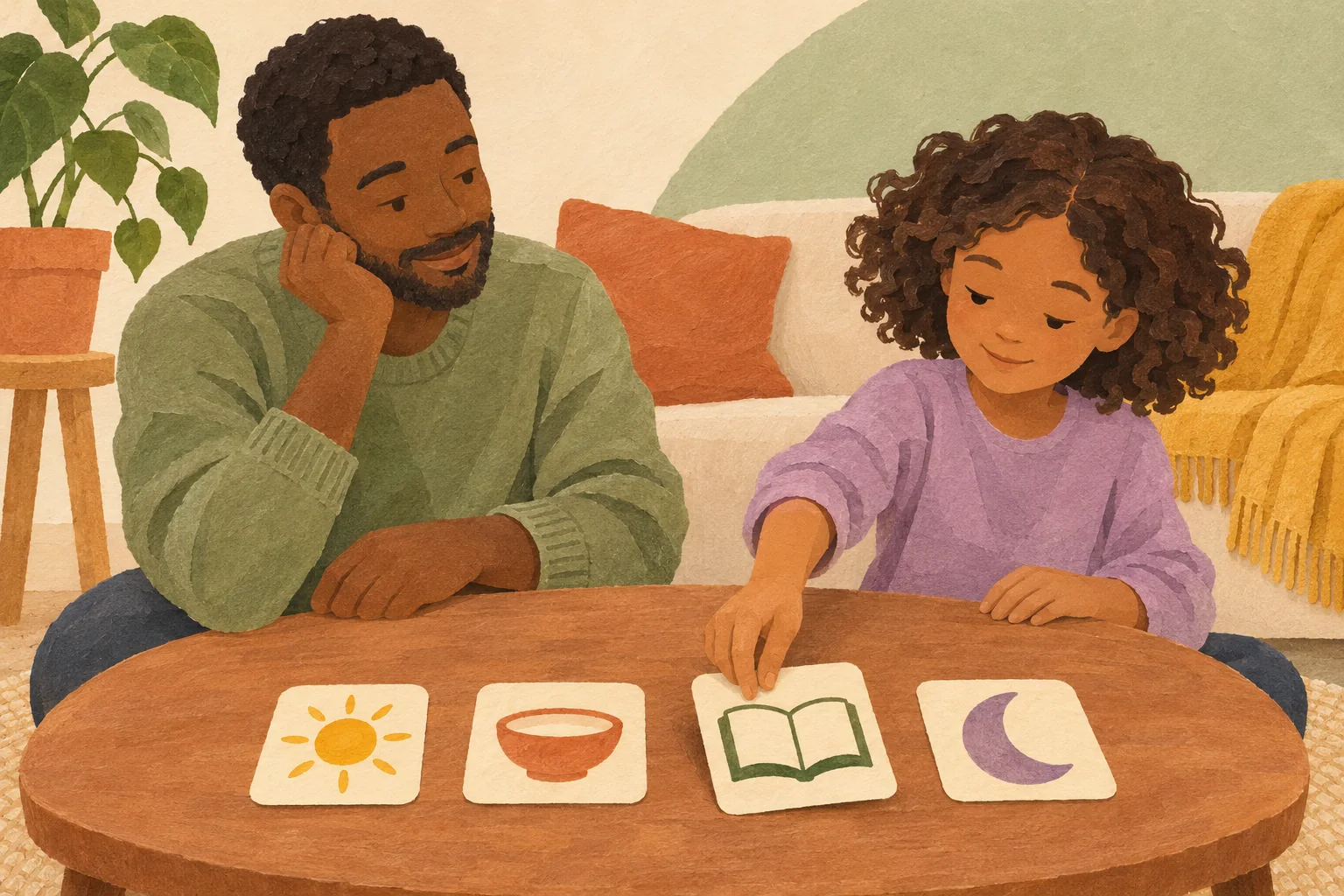
Use a visual schedule, communication card or fictional role-play to make the next step clearer. Explore on your own, with family or in a learning setting. Adapt the tools to the person, not the other way around.

Download the activity pack (PDF)

Eight A4 pages: a short guide and all six activities. No sign-up needed.

Illustration of two people arranging picture cards for an everyday routine.